Free Walking Tour Berlin: How Tip-Based Tours Actually Work

Updated: Oct 29
You see the phrase everywhere in European cities: free walking tour. It sounds simple, but it also sounds suspicious. Is it actually free? Is there a catch? Will someone pressure you at the end? How much should you tip? Here is the honest explanation.
A free walking tour is better understood as a tip-based walking tour. You do not pay a fixed price before the walk starts. You join, experience the guide, and decide at the end what the walk was worth to you. That model can be excellent when it is used honestly. It makes a guided city introduction accessible and lets guests with different budgets join the same walk. It only works when expectations are clear.
The short answer
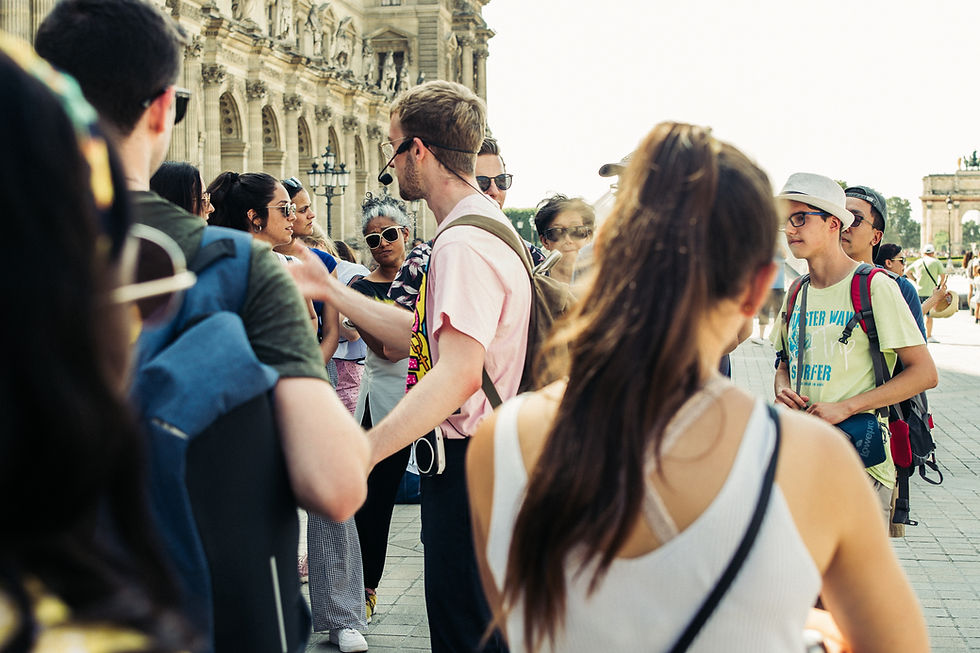
A free walking tour is a guided group walk with no fixed upfront price. Instead of paying before the experience, you tip at the end, based on how good the walk was, how long it lasted, your travel budget, and how much value the guide gave you.
The deeper answer is that the model depends on trust. The guide trusts guests not to treat free as a loophole. Guests trust the guide not to turn the final minute into a guilt speech. When both sides respect that, the model works well.
Why is it called free?
The word is imperfect. It usually means free to join, not free of value. You can book without paying in advance, show up without a ticket, and leave at the end with the amount you choose. For a traveller who is not yet sure about a city, that lowers the risk.
The guide is still working. A good guide prepares stories, checks routes, keeps up with changes in the city, looks after the group, answers questions, handles weather, and keeps the pace human. That work happens before the walk as much as during it.
So I prefer the phrase tip-based tour. It is less catchy, but it describes the model accurately: no fixed ticket price, a guest who decides the amount at the end, and guide income that depends on the guest experience.
How a typical day works
Most tip-based walks follow the same rhythm. You book a spot online, which tells the guide roughly how many people to expect. You arrive a few minutes early at the meeting point, which is usually a landmark, a square or a station exit. On my own route, it is the World Clock at Alexanderplatz.
The guide checks the group, explains the route, gives a short safety note, and starts walking. At the end, the guide explains how tipping works. You decide what the experience was worth, say thank you, ask last questions if you have them, tip if you can, and leave. There should be no mystery about any of this.
Is there a catch?
There should not be. In a healthy tip-based model the deal is open: the guide gives the experience first, and you choose the value afterward. The model becomes uncomfortable only when expectations are hidden. A walk should not pretend no payment is expected and then pressure guests at the end. It should not advertise itself as free while treating one specific amount as a forced minimum.
Guests have a side to keep fair too. It is not right to enjoy a strong walk, take the guide's time with extra questions, and then act as if free means the work had no value. The fair middle looks like this:
the guide explains the model honestly
the guest understands that tips are how the guide is paid
the final amount stays the guest's choice
nobody is shamed for the amount they give
How much should you tip in Berlin?
My simple rule for a good walk is this. EUR 10 is a normal, fair tip. EUR 15 is a strong thank-you for a very good guide. EUR 20 or more is generous when the walk was a real highlight, for example when it helped you plan the rest of your trip, made confusing history clear, or gave you recommendations you used later.
If your budget is tight, give what you can without embarrassment. If your budget is comfortable and the walk was good, do not hide behind the word free.
What to carry in cash

Cash is still the easiest way to tip. Some guides accept cards or mobile payments, but do not count on that unless the tour page says so clearly. A simple setup is one EUR 10 note for a normal tip, an extra EUR 5 or EUR 10 if you might go higher, and some coins for toilets, lockers, bakeries or snacks.
What if the walk is not good?
Then tip less, or tip nothing if it was genuinely poor. That is part of the model. A tip-based walk should not trap you into rewarding poor work. If the guide was unprepared, disrespectful, careless with the group, factually sloppy, or made you uncomfortable, you do not have to pretend everything was fine.
Be fair with your standard, though. Bad weather, construction fences and a crowded city centre are not the guide's fault. A story that challenged your assumptions is not automatically a bad story. Judge the guide on preparation, clarity, care, honesty, pacing, and whether the walk helped you understand the city.
What if you have to leave early?
If you leave near the start because the walk is not for you, you do not need to tip. If you leave near the end because of a train, a lunch booking or weather, tip before you go. Walk up during a pause, say you need to leave, give what feels fair, and go. Guides understand travel days.
Is a free walking tour good for a first day in Berlin?
Yes, if the route and the guide are good. Berlin does not explain itself easily. The distances are wide, the centre is layered, and many important places look confusing at first. A first-day walk can show you why Alexanderplatz looks the way it does, why Museum Island matters, why the TV Tower dominates the skyline, and how to plan the next day. That orientation is often more useful than another list of sights.
a mental map of the city centre
the difference between medieval, Prussian, Nazi, Cold War and reunified Berlin
practical tips for the rest of your trip
enough context to decide which museums, memorials or neighbourhoods deserve more time
What makes a good walk?
A good walk is not just a guide talking while people follow. It should have structure. You should know where it starts, roughly where it ends, how long it lasts, what it covers, and how the tipping works. The guide should be clear about facts and honest about uncertainty. Berlin history is complicated, and a good guide does not flatten it into easy drama.
a clear meeting point
a realistic duration
visible route logic
an honest explanation of tipping
a manageable group size
no aggressive pressure at the end
practical recommendations after the walk
Common misunderstandings
"Free means I should pay nothing." Not quite. Free means no fixed price up front. If the walk was good, the guide is paid by tips.
"There must be a hidden sales pitch." There should not be. Some companies use free tours to promote paid ones, but a good guide should still deliver a complete, useful walk.
"I have to tip the same as everyone else." No. The amount is your choice. Use quality, budget and value as your guide.
"If I ask questions, I owe more." Questions are welcome. If the guide gives extra time and useful advice, it is fair to reflect that in the tip if you can.
"A free tour must be less professional than a paid one." Not necessarily. Some tip-based guides are excellent because the model rewards quality directly. Some paid tours are mediocre. Judge the guide in front of you.
How my own walk works
I run Walk of Berlin, and this post has described the tip-based model in general. My own walk, Berlin Then and Now, is not part of that model. It is a paid tour at EUR 15 per person, paid when you book, with a fixed price and no tipping. No more than 10 people join each walk, and a walk needs at least 2 guests. It runs on selected days, so check the booking page for dates.
The walk lasts about 2.5 hours and covers 11 stops and 16 places. It starts at 12:30 at the World Clock on Alexanderplatz and moves through the historic centre to Hackescher Markt, with an archive photo at every stop. You can cancel or change your date without a fee up to 24 hours before the walk.
Book Berlin Then and Now here: https://www.walkofberlin.com/book-berlin-walking-tour/berlin-then-and-now